Civil rights program highlights efforts in Pottstown
POTTSTOWN — Sixty years after the March on Washington super-charged the national Civil Rights movement, the moment was marked — as well as the 20 years of activism in Pottstown that preceded it — with a free program at the TriCounty Active Adult Center.
The event took place in the shadow of a deadly racially-motivated shooting in Jacksonville, Fla., Saturday in which a white man wearing a mask and firing a weapon emblazoned with a swastika gunned down three Black people.
“It’s still dangerous to be Black and living in America,” Tyrone Robinson proclaimed from the audience of the two-hour program.

“It’s been 400 years. We have Black people who died fighting for this country, who died for a democracy we don’t even share in,” he said. “We can’t get any justice in America.”
That does not mean people in Pottstown have not been trying for years.
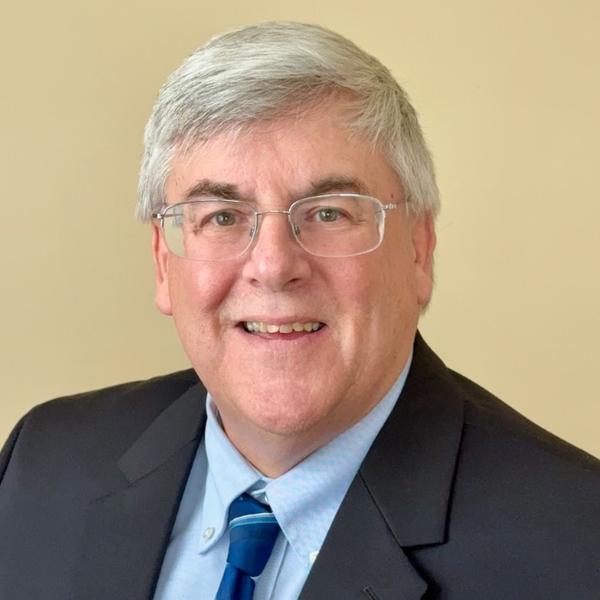
Matthew Washington, a Stowe native and assistant professor of history at Prairie View A & M University in Texas, has made a Ph.D. study of, and written a book about, the fight for civil rights in the Pottstown area — a fight which proceeded by two decades the more famous march.
Washington addressed Monday’s program from Texas, through Zoom, and said that he hopes more efforts will be made to research local efforts around the country, to help put the national narrative into a more local context.
“These are almost forgotten civil rights struggles that should be illuminated,” Washington said. “I hope by examining these smaller space struggles, that other scholars will look at places we don’t normally associate with civil rights.”

The national narrative, Williams said, so often focused on the struggles in the South, were discrimination was enforced by law. But in the North, he said, despite its absence in laws, discrimination was present. “It was less overt, but it was there.”
And, it was being fought by people like the late Newstell Marable, who was president of the Pottstown chapter of the NAACP for years, and his wife Millicent. Both were present at the March on Washington, but also had long been part of the fight for racial equality in the Pottstown area, which had been going on since the 1940s, Washington said.
One common racist practice was “red-lining,” by which housing loans were used to keep Blacks out of some neighborhoods and concentrate them in others. And it was a housing struggle where, Washington said, The Pottstown Mercury began to shine in its crusade for civil rights.
The paper and it’s publisher, Shandy Hill, were “an outlier. It was not like other northern newspapers which covered the civil rights struggle in the south, but ignored the struggles in their own back yards.”
Also important in the local fight for civil rights were unions, Washington said his research revealed. He singled out James Corum, who was an official in the union at Flagg Brass in Stowe as well as an activist. “Pottstown was a working class town. These were not full-time activists and these leaders had full-time jobs. The civil rights leadership in Pottstown was mostly working class.”
“Pottstown played a significant role in its own civil rights struggles. It was indigenous,” Washington said. “There were not organizations that were coming from outside the community.”
In addition to looking to and celebrating the past struggles for civil rights, what is needed now is to focus on the future, said Stephanie Allen, the director of equity, diversity and belonging at Montgomery County Community College. She and Constance Dogan, vice president of the Waverly Heights Retirement Community, who oversees diversity, equity and inclusion programming there, comprised the panel which fostered discussion after Washington finished his presentation.

Allen said she sees “more parallels than I would like” between the historic struggles for civil rights and the conditions in the country right now. “It’s all rooted in how things started. We still see the same police brutality, the same racism, the policies which are now being put into place.”
Also a member of the Phoenixville School Board, Allen said she sees “great disparity among school districts. There is work to be done.”
Dogan said despite the fact that she was born in Philadelphia and has never been to a Muslim-majority country, because she is a Muslim woman, after the 9-11 attacks, “I was viewed as they were.”
She also talked about how she was stopped by police because her car matched the description of one the police were looking for.
“They came to my car, guns drawn. They threw me on the hood of my car and searched my car without asking me a single question.” Telling that story, she said, helps jump start difficult conversations about race because “it puts a face to the things you hear about. When you see things like this on the news, you immediately think “I wonder what he did?’ But I hadn’t done anything.”
Allen said she advises following a practice she calls “the three Ls. Listen, learn and lean in to necessary change,” by which she means “don’t make a safe space for the inexcusable.”

“We have to hold these folks accountable,” Allen said of racists, adding that does not mean explaining to them why what they have done is wrong. “It is not the responsibility of the folks who are being oppressed to educate you about their oppression,” she said.
Denise Williams, who is the CEO and Founder of Pottstown’s own BeRezillient, Healing through the Arts, facilitated the panel discussion and advised the audience that “we cannot change the past, but we can move forward.”
Categories
Recent Posts




GET MORE INFORMATION