Fromm Electric celebrates 100th anniversary
One hundred years ago, Alexander and Louis Fromm began selling kitchen appliances out of a small storefront in Morristown, N.J.
The founders of Fromm Electric had a philosophy: prioritize long-term relationships over short-term gains.
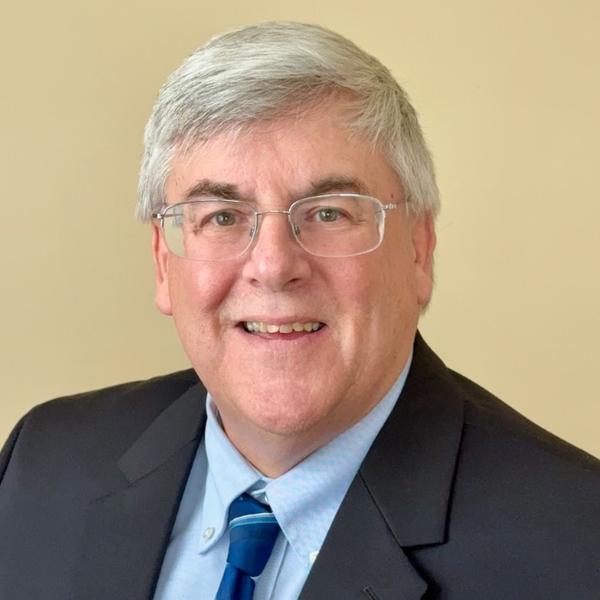
CEO and third-generation owner Michael Fromm believes it was that approach that led Fromm Electric to thrive over the decades.
“We always say that our allegiance is to our employees, our customers and our communities, rather than to Wall Street analysists,” Fromm said.
And thrive the company has, evolving into an industry leader headquartered in Reading with 120 employees spanning nine branches including Pottstown and Souderton.
Fromm now supplies electrical products to commercial and residential builders and provides factory automation solutions to manufacturers.
Fromm said his father, Bernie Fromm, who took over the business in 1962, orchestrated a major shift in the company’s direction — one that ensured its longevity.
He said his father chose to move into factory automation in the 1980s at a time when most manufacturing firms were relying on manual-labor intensive production systems.
“They (the old systems) were prone to frequent breakdowns and safety issues,” Fromm said. “It was very difficult for companies to grow. So we became the provider of choice for regional manufacturing companies struggling to become more efficient.”
Fromm said his father’s executive decisions illustrated how critical it was to continue investing in strategies to help your customers become more successful.
He said failure to innovate and adapt to changing circumstances can be a major risk for family enterprises.
“I measure my success based on how successful my customers are,” Fromm said.
An example of that during Fromm’s own tenure was the decision to launch a division that builds control systems, sells software and provides other services geared toward improving the efficiency and safety of manufacturing operations.
Success can be deceptive, Fromm noted.
“It’s always a little bit intoxicating when you have some success…it can lead to, perhaps, delusions of grandeur,” Fromm said. “I prefer to think that if I hire people who are smarter and more talented than I am they’re the ones who are going to be able to see around the corners.”
Finding the right people to carry a company forward long-term is why proper succession planning is so critical, Fromm noted.
“There isn’t always a family member who has the skills or interest in taking over a business,” Fromm said.
Fromm’s own succession strategy involved stepping down from his role as president of the company in 2009 and handing the reigns to John Hanna.
“I had groomed someone who I felt was more capable of doing that job. He’s been running the company ever since,” Fromm said.
Fromm credited his management team with the decision to launch the new division, which addresses issues of retiring manpower and talent in the manufacturing industry.
“We had to find ways to become even more valuable to our customers,” he said. “I’d like to think that I was the person who developed these strategies, but I’m not. I have great talent in the company who continues to bring these strategies to the owners.”
Fromm also cautioned family businesses to avoid the trap of seeing the company as simply a source of income for the family.
“As an owner, this requires taking a step back from your operating role and making an honest assessment of your company’s performance, in the same way your bank or other creditors would evaluate your enterprise,” Fromm said. “You have to take a step back and look at it (the business) like an investor would.”
Community engagement is also an important factor in long-term success, Fromm said.
“If you look at the statistics, the percentage of profits that are reinvested in the community are always higher for private companies than for public or international companies,” Fromm said. “What that tells you is that private company owners see community engagement and the growth of their company going hand in hand. You can call it enlightened self-interest, but who cares. If you’re doing good things in the community, the community will likely respond.”
Fromm said his company gives employees paid time off to do volunteer work in addition to heavy involvement with the United Way campaign.
“We encourage them to be involved in their local communities,” Fromm said, “We don’t dictate what people should or shouldn’t be involved in, but we celebrate the things they do to help people.”
Taking a comprehensive and analytical approach to long-term survival is Fromm’s way of ensuring his company defies statistics that claim most family-owned companies fail during the third generation.
“Statistically my generation is the one that derails the family business,” Fromm said. “I’m determined for that not to be my legacy.”
Fromm noted both of his children, as well as the children of his brother, Lou Fromm, vice president of business development, chose not to pursue the family business.
But Fromm believes that putting together a management team of extremely competent people was his way of staying true to the entrepreneurial spirit and honoring the values of the founders.
He said his grandfather, Louis Fromm, would likely be proud but shocked at how far the company has come.
“Their minds would explode, seeing a company (that started) with four employees selling kitchen appliances can be helping multinational manufacturing companies lead their industries,” Fromm said.
The company celebrated its 100th anniversary on July 27 in a ribbon-cutting ceremony with the TriCounty Area Chamber of Commerce at its Pottstown location.
The event included an outdoor barbeque, giveaways from suppliers and a cornhole charity toss, where Fromm made a donation to the United Way for every bag that scored.
Celebrations were also held throughout July at each of Fromm’s nine locations.
Categories
Recent Posts




GET MORE INFORMATION